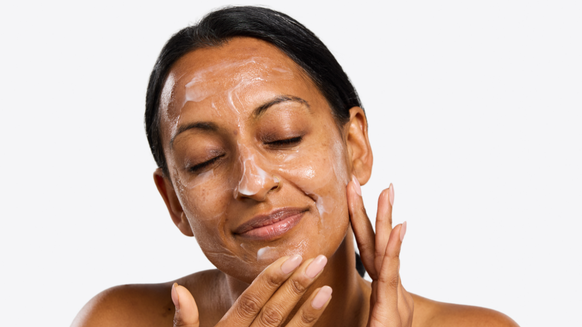
Dark Upper Lip: Causes and How to Improve Its Appearance

When we think of summer skin, our minds often go to a healthy-looking glow, dewy cheeks or a scattering of freckles. But sun exposure can also contribute to uneven tone, including one concern that can feel particularly noticeable: a dark upper lip.
Sometimes referred to as a sun mustache, this can appear as a shadow above the lip, a darker-looking top lip area or patches of pigmentation around the mouth. Unlike a tan that fades evenly, this type of discolouration can linger, especially when the area is exposed to UV regularly.
With the right understanding and a consistent skincare routine, it is possible to support a more even-looking complexion over time.
What Causes a Dark Upper Lip?
A dark upper lip is usually linked to excess melanin. Melanin is the pigment that gives skin, hair and eyes their colour. When it is produced unevenly or in higher amounts in one area, it can lead to visible dark patches.
Several factors can contribute to upper lip pigmentation, including:
- Sun exposure
- Hormonal changes
- Pregnancy
- Genetics
- Skin sensitivity or irritation
- Certain hair removal methods
Hormonal changes can make the skin more prone to pigmentation, while UV exposure can make it appear more noticeable. This is why hyperpigmentation on the upper lip may become more visible during or after summer.
Why can the upper lip look darker in summer?
The upper lip is a particularly vulnerable area because it is exposed to daily movement and contact. Eating, drinking, wiping the mouth and applying lip products can all reduce SPF coverage throughout the day.
The area can also become more sensitive after hair removal methods such as waxing, threading or depilatory creams. If skin is irritated and then exposed to sunlight, uneven tone may look more pronounced.
This does not mean you need to avoid hair removal altogether, but it does mean the skin above the lip needs gentle care, consistent sun protection and barrier support.
Why is the upper lip so prone to pigmentation?
The upper lip is a particularly vulnerable area because it is exposed to daily movement and contact. Eating, drinking, wiping the mouth and applying lip products can all reduce SPF coverage throughout the day.
The area can also become more sensitive after hair removal methods such as waxing, threading or depilatory creams. If skin is irritated and then exposed to sunlight, uneven tone may look more pronounced.
This does not mean you need to avoid hair removal altogether, but it does mean the skin above the lip needs gentle care, consistent sun protection and barrier support.
How to improve the appearance of a dark upper lip
Pigmentation above the lip can take time to visibly improve, particularly when it is linked to sun exposure, hormonal changes or repeated irritation. A consistent routine can help support a more even-looking complexion, but the focus should be on gradual improvement rather than quick fixes.
The most helpful approach is to:
- Protect the area from UV exposure
- Support gentle surface renewal
- Keep the skin hydrated and comfortable
- Avoid harsh scrubs or aggressive treatments
Because the skin above the lip can be delicate, over-exfoliating may cause irritation, which can make uneven tone appear more noticeable.
Ingredients That Can Help Support a More Even-Looking Tone
When caring for pigmentation, look for ingredients that support renewal, hydration and overall skin clarity.
AHAs, such as lactic acid, help encourage surface cell renewal by loosening the bonds between dead skin cells. This can help improve the appearance of dullness and uneven texture over time.
Hydrating and barrier-supportive ingredients are also important. Skin that feels comfortable and well moisturised is often better able to tolerate active ingredients, particularly in more delicate areas of the face.
Brightening ingredients such as vitamin C and niacinamide are also commonly used in routines focused on uneven tone and radiance.
A Simple AMELIORATE Routine for Upper Lip Pigmentation
A routine for a dark upper lip should be gentle, consistent and focused on improving the appearance of uneven tone over time.
Step 1: Transforming Facial Concentrate
Transforming Facial Concentrate contains AHAs to help support gentle surface renewal. Used carefully on the skin above the upper lip, it can help smooth the surface and encourage a fresher-looking complexion.
Avoid applying it to the lip itself, and do not use it on skin that has been freshly waxed, threaded or irritated. If your skin is sensitive, introduce it gradually.
Step 2: Transforming Facial Cream
Transforming Facial Cream helps support hydration and skin comfort while also containing AHAs to encourage gentle renewal. This makes it a useful partner to the tonic for skin that looks uneven or dull.
Keeping the skin barrier supported is important, as dryness or irritation can make pigmentation appear more prominent.
Step 3: Daily SPF
SPF is essential when caring for pigmentation. Apply it every morning, paying close attention to the upper lip area, and reapply during the day, especially after eating, drinking or wiping your mouth.
This is particularly important when using products containing AHAs, as they can increase the skin’s sensitivity to the sun.
The Takeaway
A dark upper lip is often influenced by melanin, UV exposure, hormones and skin sensitivity. While it can be frustrating, gentle renewal, hydration and consistent sun protection can help improve the appearance of uneven tone over time.
Shop This Post:

£20.00

£24.00

Josie is an Online Beauty Editor with a Bachelor of Arts degree in Journalism. Her passions involve all things skincare and beauty and in her free time she likes to travel, read and get her beauty sleep.